Translation
Translation of the contract
Need Arabic Translation?
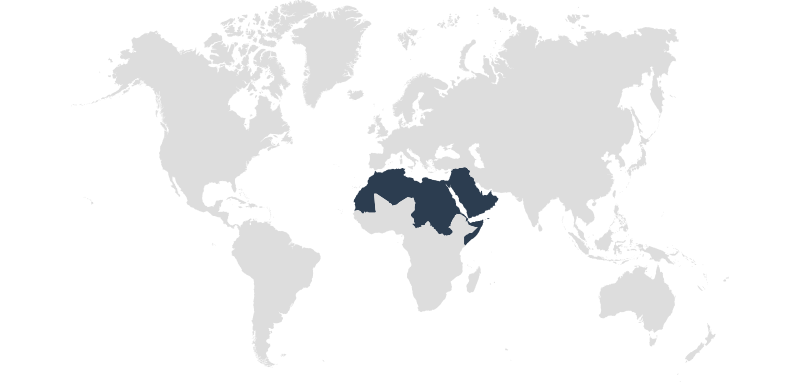
Arabic is the official or native language in 22 Arab countries located in Southwest Asia and North Africa. With approximately 300 million speakers, Arabic ranks fifth in the world in terms of number of speakers, following Chinese, English, Spanish, and Hindi.
The Language of the Qur’an, Rich in Expression
Arabic, the language of the Islamic holy book the Qur’an, is renowned for its expressive power and historical depth. It has changed gradually and conservatively over centuries, with many Arabic words adopted into other languages worldwide, as well as religious terms.
Characteristics of Arabic Translation
Arabic is divided into two major forms depending on context:
- Fusha (Classical or Modern Standard Arabic): Written Arabic, which is used for document writing, official announcements, news reports, and recitation of religious scriptures, is based on classical Arabic and is referred to as “Modern Standard Arabic (MSA).” It can be learned through education. It is mainly used in limited situations such as official documents, public institutions, and the media.
- Ammiya (Colloquial Arabic): Used in everyday speech. Dialects vary widely between regions, sometimes to the point of mutual unintelligibility. In particular, dialect differences are challenging to understand in the Middle East and North Africa.
Because of the sharp distinction between spoken and written Arabic and the vast variation in dialects, proper translation depends on the text’s target audience, region, and purpose.
Translation into Arabic is a highly specialized task that must take cultural, contextual, and linguistic nuances into account.